


(GREECE) – Warily our group approached Syntagma square at the center of Athens. This square, flanked by the parliament building, was ground zero of Greek protests. It was here that a retired pharmacist, pressed beyond endurance by the cuts to pensions and services, shot and killed himself, leaving behind a suicide note of protest against what was happening to his country. Images of riots and police, protests and violence have filled western television.
But as we entered the square what we saw was what is always there. Skylarking tourists trying to get the Evzone parliamentary guards, standing rigidly at attention, to smile, the rich and polished moving in and out of the five start Grand Bretagne hotel, Greeks braving the traffic and the traffic of taxies, cars, tourist busses and more taxies swirling around.
Athens appears to be as it always was. But Greece is not as it always was. Nor is it as pictured in western media. Here are some perspectives based on observing the city, reading the local English-language press and conversing with Greeks “at ground level.”
The meaning of the election
Greece’s election in early May produced no government. The results were widely interpreted as meaning that 65 percent of the population voted against continuing the austerity program in general and against Europe, or the euro in particular. This is not precise enough.
Sixty five percent voted against the two leading parties, New Democracy and PASOK. In doing so, they were voting against the recent decades of political process. While New Democracy, a center-right party, is compared to the Republicans, and PASOK, a center-left party, to the Democrats, in truth, what they had in common was a clientalist, patronage approach to achieving and retaining power.
Despite different rhetoric, both parties regularly manipulated the electoral system to favor themselves, doled out feather-bedding jobs in the public sector to build loyalty and spent tax money lavishly in the run-up to elections. So who did voters vote for?
The rising star
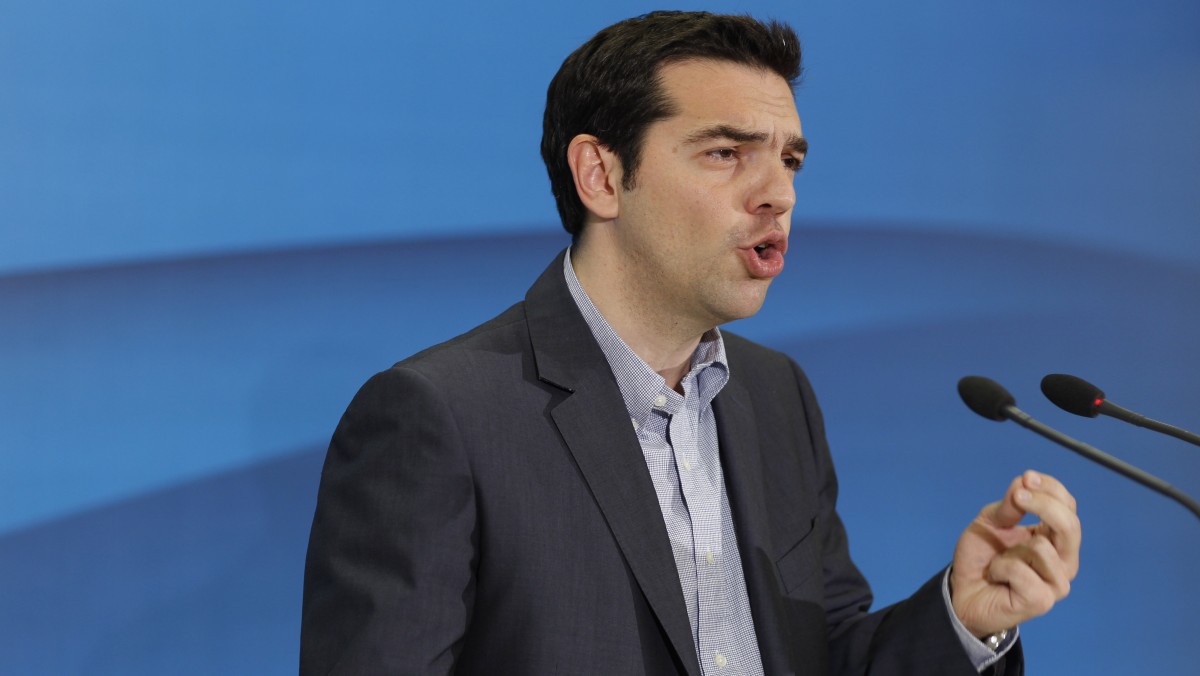
The big winner was Alexis Tsipras, an inexperienced politician whose Syriza party (a coalition of several parties) rode to second place in the elections. “Syriza” is often named in English writing as the “Radical Left.” This is not a judgment on its policies, but its actual name – a name that could equally be translated as “non-traditional.”
However, Tspiras does advocate a radical shift. He firmly rejects the current bailout agreements and argues that the election results back him up. He wants an end to austerity but does wish Greece to stay in the euro. What he appears to lack is a plan. What economic policies should Greece pursue? How would the rest of Europe agree to these plans? Or how would Greece manage outside the Euro? There are no clear answers to this so far.
The extremes
Notice has been taken of the increased vote for both the far left and the far right. Both seem like protest votes and neither extreme seems posed to exploit these gains. The traditional Communist party gained significantly. But their leader refuses to discuss participating in any coalition with any other party, maintaining their goal is a straight majority of the vote, something no one thinks even remotely possible.
On the far right are two parties, Golden Dawn and LAOS. Neither are led by compelling figures and increased attention seems only to expose them to more ridicule. Golden Dawn is regularly described as neo-Nazi, and their leader does flatly deny the existence of the Holocaust, but their real issue is controlling immigration and limiting crime. Votes for the far right are seen to be clearly against the center, not for the right.
Growth, austerity and self-indulgence
Greeks who reject the bailout agreement are sometimes characterized as wanting a return to self-indulgence. Rich Germany, then, is pictured as tired of supporting lazy Greeks. And there is doubtless some truth to this, but it is grossly unfair to dismiss the pain Greece is experiencing as simply a desire for free money.
Pensions have been cut by 30 percent in some cases. Unemployment stands at 21 percent, with youth unemployment higher than that. Some employees have been showing up for work loyally even though they have not been paid for months. In reaction to its image in the world, tourism to Greece is down, perhaps by 20 percent in some sectors, further impoverishing many. Rising fuel costs, added to lower passenger loads, are stressing the entire ferry system which is the key commercial and personal transport link for the dispersed Greek economy.
There is a sense, expressed around the edges of conversations, that the country is staring at the abyss; that one more blow, one more measure of “austerity” or “deficit reduction” will tip the nation over into collapse.
The failure of the political class
On all sides, there can be seen the need for creative leadership, and that such leadership doesn’t exist. There is no doubt that decades of policies by Greek leaders that simply “kicked the can down the road” rather than solving problems contributed greatly to this current situation. It is also true that they seem to have nothing concrete or different to offer now.
But it is not just the Greek politicians that have failed. Germany’s Merkel and other officials explain that the terms of the bailout cannot be renegotiated in any way – on the very same day that the agency dispersing funds to Greece decided to withhold one billion Euros simply because of distaste for the election results. Other EU officials speak of how Greece will simply have to suffer more pain. How will this pain lead to growth? There is no plan for that.
In the U.S. Paul Krugman seems to stand alone in pointing out that the austerity approach not only hasn’t worked, it has never worked, and there isn’t even a plausible theory about how it would work.
Greece certainly created a serious problem for itself. Greece absolutely needs an economic restructuring to deal with barriers to innovation, to establish a working tax system, to create reasonable expectations for the size of pensions and other issues as well. But little of the public discussion seems to address that.
New elections are likely in a month. It’s expected that Tsipras and Syriza will gain, perhaps becoming the leading party in parliament. But few see how that will lead to a solution.