

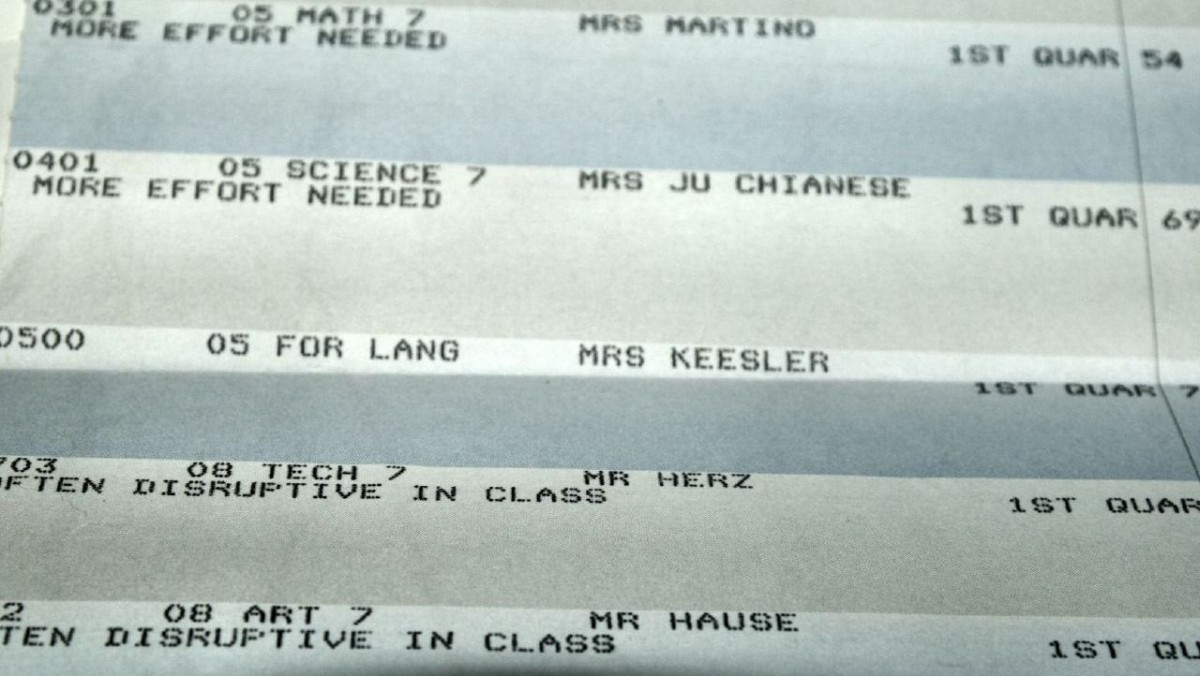
The annual Mayor’s Management Report is City Hall’s version of a report card, grading agencies on performance over the past fiscal year.
Yesterday, the City Council’s Committee on Governmental Operations graded the graders, with council members, college professors and a good-government group delivering their assessment of the edition released last week to the mayoral agency tasked with compiling the report.
The testimony included praise for a recent effort by the mayor’s office to solicit outside ideas to improve the report, which led to new features that include a section tracking improvements for young black and Latino men in education, employment and crime rates — crucial signs to gauge the success of the mayor’s Young Men’s Initiative.
Baruch College political science professor Douglas Muzzio, who participated in the effort, called it a “paradigm of conceptualization, organization, and presentation.”
But most speakers devoted their attention to what they considered shortcomings in city agencies’ reporting. Among the critiques:
- Data included in the report is selective, telling only a partial story about the successes and failures of each agency.
- Performance measures tracked by the report aren’t tied to cuts or boosts in agency budgets.
- The data in the report doesn’t meaningfully track public satisfaction with agencies’ work.
- The Board of Elections, which has suffered embarrassing vote-tallying failures, isn’t included.
“There remains much to be done,” acknowledged Muzzio. “This thousand-mile road—we’ve taken substantial steps down that road, but the end is not near,” he said.
Councilmember Gale Brewer, the committee’s chair, led off the hearing by addressing two members of the Mayor’s Office of Operations, which compiles the report.
Brewer focused her attention on the data that was included in the MMR — and also on the data left out.
She noted that often, the report described agency goals, but omitted the numbers necessary to show whether they were being met — for instance, in the New York York City Police Department’s counterterrorism efforts.
“We can agree that it’s important to implement and develop counterterrorism strategies,” Brewer said, paraphrasing a key objective for the NYPD listed in the MMR. “But there are no measures showing the scope of [counterterrorism] activity, or effectiveness, other than hours of training.”
Jeff Tryens, deputy director of the Mayor’s Office of Operations, responded that future editions of the MMR may include an interactive online version, with different levels of data that would allow readers access to more information.
But he also acknowledged that his office currently fails to organize its information sufficiently “for somebody who’s interested in an issue.”
Alex Carmada, director of public policy for the civic group Citizens Union, noted that while the MMR contains broad budget numbers for each agency, the division of dollars isn’t broken down in a way that shows spending on individual performance goals. In written testimony he suggested that information would help “accurately measure the bang for buck each agency is achieving.”
Camarda also asked that future editions of the MMR evaluate the Board of Elections — a request that is due to come before another Council committee in October, in the form of a bill sponsored by Councilmember Brad Lander.
Muzzio said he wants the MMR to do a better job taking into account citizens’ satisfaction with the various mayoral agencies—something he said that the current report doesn’t track in a comprehensive manner. Indeed, for many of the mayoral agencies, the MMR’s customer service measures are limited to basic yardsticks like email and letter response times.
“If you want to know how you’re doing, you have to ask the customer,” Muzzio said. “We don’t do that in a rigorous way.”
Jack Krauskopf, a lecturer in public policy at Baruch College and former city Human Resources Administration commissioner, offered a novel suggestion: the Mayor’s Office of Operations, he said, should ask agencies to think about performance measures they wish they had, but don’t yet have the technology or means to track, “as a challenge to [the] research community, to the general public, to advocacy groups.”
“Add some of those aspirational indicators, so people can think about those,” he said.
This story was originally published by the New York World.