

With campaign finances limits renderednearly meaningless, election spending is on pace to set records. Where does each presidential candidate stand on how to regulate money in politics?
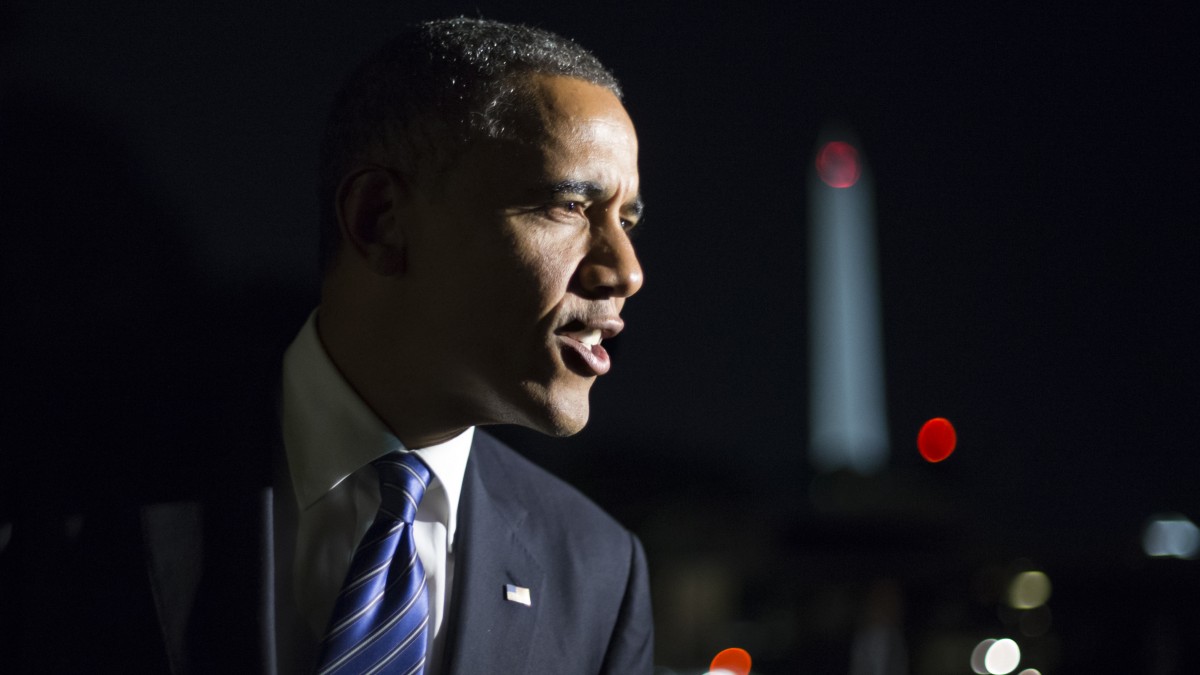
President Obama talks about changes but hasn’t instituted many. He favors legislation that would require disclosure of donors to dark money nonprofits. The president has also floated a Constitutional amendment to address Citizens United — an idea that’s currently politically impossible. Yet advocates point out Obama hasn’t even instituted campaign finance measures that he could do on his own using executive power.
Mitt Romney has mostly stayed mum. His campaign doesn’t have an official position paper on campaign finance and wouldn’t answer questions. When asked, Romney has said he favors removal of contribution limits to candidates, as a way to bring money from outside groups back into campaigns. He has also said he favors donor disclosure but hasn’t signaled support of specific legislation.
Here are the details:
President Obama
Obama supports the DISCLOSE Act, a bill that would requiredisclosure of donors to politically active nonprofits, which are currently funded with anonymous money. In July, the bill failed to get 60 votes in the Senate after Republicans opposed it. An earlier version passed the House in 2010 when Democrats were in the majority.
In its statement on the disclosure bill, the administration criticizedthe Supreme Court’s 2010 decision in Citizens United as “bringing about an era where corporations and other wealthy interests can exert vastly disproportionate influence, including through anonymous donations.”
In August, during a Q&A session on the website Reddit, Obamasaid the country should eventually consider a Constitutional amendment.
“Over the longer term, I think we need to seriously consider mobilizing a constitutional amendment process to overturn Citizens United (assuming the Supreme Court doesn’t revisit it),” the president wrote. “Even if the amendment process falls short, it can shine a spotlight of the super-PAC phenomenon and help apply pressure for change.”
He did not give specifics on what such an amendment would say.
Meanwhile, campaign finance regulation advocates in Washington have been disappointed by Obama’s first term.
“There are a lot tangible things that he could have done that he did not do,” says Lisa Gilbert, director of Congress Watch at Public Citizen.
Gilbert and other advocates pointed to an executive order drafted by the White House and floated in the media in 2011 that would have required government contractors to reveal political spending, which would shed light on otherwise unreported corporate contributions.
A year later, the Hill reported that the administration had “all but abandoned” the idea. It’s never been implemented.
Regulation advocates also complain that the administration has not offered nominations for the five of six FEC commissioners whose terms have expired. The agency, which has three slots for members of each party, is paralyzed by partisan deadlock on many issues.
The administration said in June in response to a petition that “the Obama Administration is committed to nominating highly qualified individuals to lead the FEC” — but nominations have not materialized.
Obama campaign spokesman Adam Fetcher said he could not comment on whether Obama would take any actions without Congress — such as executive orders or FEC recess appointments — in a second term.
Pro-regulation groups are also unhappy with Obama’s reversal on super PACs, which the president’s campaign had criticized but later embraced.
Mitt Romney
Asked for details about Romney’s position on campaign finance, spokeswoman Andrea Saul responded with a link to a page on Romney’s website on “cutting the red tape” of regulation.
The page doesn’t mention campaign finance. Instead, it promises Romney will roll back regulations generally.
The campaign did not respond to questions about Romney’s stance on the DISCLOSE Act and other specifics.
During the Republican primary in February, Romney was endorsed by James Bopp, thearch-foe of campaign finance regulation. At the time, the Romney campaign told the Boston Globe that Romney believes Citizens United was correctly decided.
That followed comments Romney made to RealClearPolitics in December in the midst of a Republican primary dominated by single-candidate super PACs. He said he supported a system that would allow unlimited individual donations to candidates. The limit on individual donations directly to candidates is $2,500 per election, one of the few regulations left intact after Citizens United.
“[W]hat we have right now is unlimited political contributions, but they’re not controlled by the campaigns,” Romney said. “They’re controlled by unaffiliated or uncoordinated entities, which, in my opinion, is the worst of both worlds. It means that large contributions have a big impact, and it means that the campaign can’t control them, so if we’re going to have big contributors, wouldn’t it be nice to have the campaigns responsible for what those contributors say?”
In an interview with the Portsmouth Herald editorial board last year, Romney also endorsed the idea of donor disclosure.
“I wish we could find a way to get money out of politics. I haven’t found out a way to do that,” he told the New Hampshire newspaper. “I think the best way, by the way, is to let people make whatever contributions they want and have it instantly reported and know what conflicts exist so we know where the money is coming from.”
There is one area where Romney has floated tighter restrictions: money from teachers unions.
At an NBC forum in September on education, Romney criticized the unions’ donations to candidates who later negotiate contracts with teachers.
“I think we [have] got to get the money out of the teachers unions going into campaigns,” he said. “It’s the wrong way for us to go. We’ve got to separate that.”
Vice presidential candidate Rep. Paul Ryan has opposed the DISCLOSE Act, calling it “unconstitutional” in a 2010 statement.
This story was originally published by ProPublica.