


On Aug. 15, 1945, Japan announced its surrender. On Sept. 2, WW II officially ended. Japanese Foreign Affairs Minister Mamoru Shigemitsu’s formalized it aboard the USS Missouri. Both dates signify VJ (Victory over Japan) or VP (Victory in the Pacific) Day.
End of war meant occupation. General Douglas MacArthur became military governor. He ruled a conquered state.
To this day, 67 years later, Japan remains occupied. A U.S.-Japan Status of Forces Agreement (SOFA) stipulates terms under which American forces remain and operate.
In his book “The Sorrows of Empire,” Chalmers Johnson described SOFAs as follows:
“America’s foreign military enclaves, though structurally, legally and conceptually different from colonies, are themselves something like microcolonies in that they are completely beyond the jurisdiction of the occupied nation.”
“The U.S. virtually always negotiates a ‘status of forces agreement’ (SOFA) with the ostensibly independent ‘host’ nation” – a modern day version of 19th century China’s “extraterritoriality” granting foreigners charged with crimes the ‘right’ to be tried by his (or her) own government under his (or her) own national law.”
Most U.S. SOFAs deny host countries jurisdiction over U.S. military and civilian personnel who commit crimes. Exceptions only occur at the occupier’s discretion.
U.S. bases usurp, distort and subvert local authority. Doing so assures absolution for murder, rape, other crimes, unacceptable noise, pollution, environmental contamination and appropriation of valued public land.
It lets unaccountable U.S. soldiers get drunk, cause damage and ignore local customs. They also get away with accosting, raping and murdering local women. Okinawa highlights conditions no country should tolerate.
 It’s Japan’s poorest/most southerly prefecture. It’s much like America’s Puerto Rico. It’s also a decades-long battleground. It pits Okinawans against America and their own government.
Washington appropriated around 20 percent of its choicest real estate. Okinawa remains repressively occupied. Local citizens lost rights. They remain subservient to U.S. interests. American military and civilian personnel have special privileges not afforded local citizens or Japan.
SOFA terms agreed on decades earlier remain in force today. When will Japan grow up and stop acting like a child? When will it assert its sovereign rights?
When will it place its own interests above America’s? When will it send Washington packing? When will it realize its future lies in Asia, not its destructive U.S. relationship?
Japan is a virtual American colony. It permits itself to be a satellite or vassal state. It affords Washington rights above its own. It serves U.S. imperial interests. Doing so is counterproductive. One day it’ll bite hard.
Washington treats Asian areas like its own. Administrations and Congress believe America has sovereign rights over East Asian waters and territory it wants for bases. In June, Defense Secretary Leon Panetta said around 60 percent of U.S. naval forces will be based in the Pacific by 2020.
Strengthening America’s presence is part of a new imperial strategy. It’s about going head-to-head with China. It aims to isolate Beijing regionally. It’s a recipe for heightened tensions and eventual confrontation.
Comparable Chinese or Russian presence in U.S. waters would be pretext for war. So would their bases in neighboring regional countries.
America operates like territories and waters everywhere are its own. It works because other nations don’t object. Japan goes along. It accepts what it should reject.
Last May, Obama met with Japanese Prime Minister Yoshihiko Noda in Washington. Both leaders plan strengthening their strategic ties. They’ll also boost joint military activities. At issue is China.
A joint state pledged to “further enhance our bilateral security and defense cooperation.” A commitment was also affirmed to “U.S. strategic rebalancing to the Asia Pacific.” Plans are to establish “a more geographically distributed and operationally resilient force posture in the region.”
Washington has been “rebalancing” in East Asia for years. Strategy calls for strengthening military, economic and political ties with Japan, South Korea, India, Australia, New Zealand, Indonesia, the Philippines, Thailand, Myanmar, Singapore and Vietnam.
It’s also about undermining Chinese influence, isolating it from neighbors and giving Washington more dominance over territories and waters not its own. Russia is also affected.
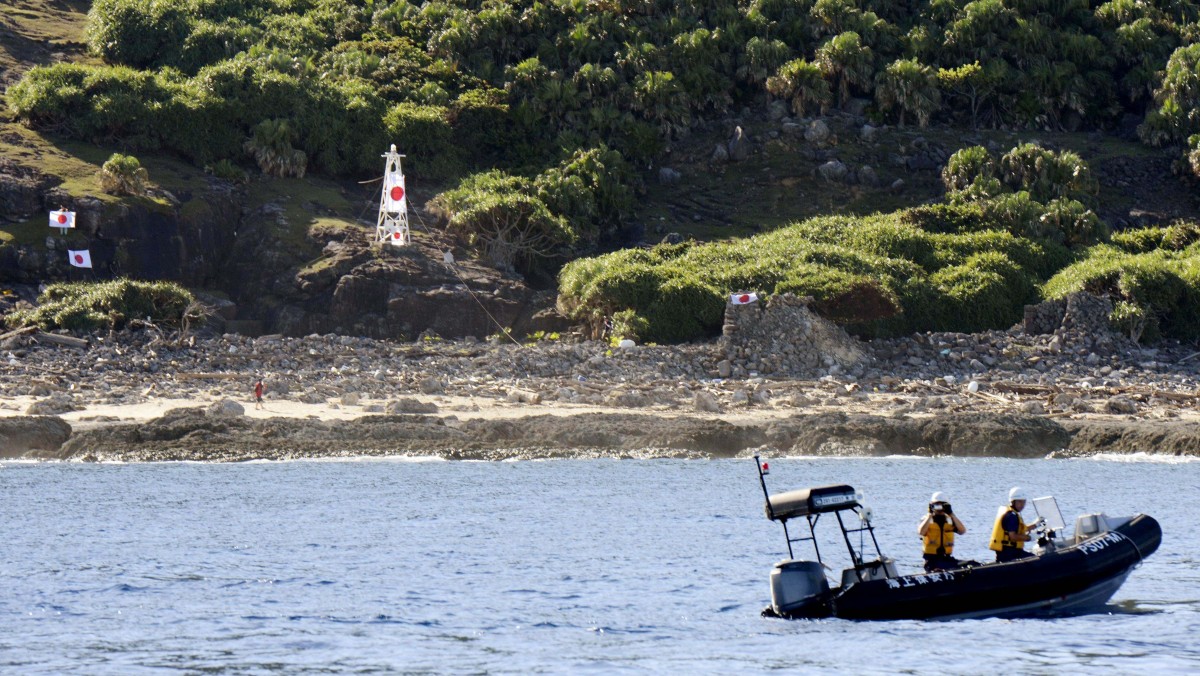
 Noda said he’ll boost Japan’s East Asian defense posture. He included what he calls the “Southwestern Islands.” China named the archipelago Diao Yu Tai. Japan calls the main island Senkaku, For China, it’s Diaoyu.
Taiwan also lays claim. Its name is Diaoyutai. China calls Taiwan sovereign Chinese territory.
Archipelago islands are uninhabited barren rocks. They comprise about 6.3 square km. They lie 120 nautical miles (nm) northeast of Taiwan, 200 nm east of China’s mainland and 200 nm southeast of Okinawa.
Dispute among them remains unresolved. America occupied them them from 1945 – 1972. Washington now upholds Japan’s position.
Three issues are involved. Least important is sovereign territory. Beijing calls Diaoyu island and its adjacent islets inalienable Chinese land since ancient times. Japan’s claim constitutes infringement, it claims.
In 1895, Tokyo seized the islands during the Sino-Japanese War. At end of WW II, China reasserted sovereign rights it calls lawful and indisputable.
Key is what lies offshore. Substantial oil and gas deposits are sought by whichever country controls them.
Geopolitics are also in play. Washington’s playing its Asia card. Closer ties with regional nations isolates and weakens China. Japan’s a willing partner. Going along harms its own interests.
China’s Global Times said “Japan has to make a choice: back up and create the conditions to reduce tensions….or head into a full confrontation with China. Whatever Japan’s choice, China will respond accordingly.”
In mid-August, Chinese nationals came ashore on the main island. Tensions flared when Japanese citizens followed days later. Doing so was unauthorized, provocative and staged. Anti-Japanese demonstrations in Chinese cities followed.
Later this year, Beijing’s government has a once in a decade leadership change. Low approval ratings trouble Japan’s Prime Minister Noda. New elections may be forced. Domestic pressure and geopolitics turned a teapot into a tempest.
Japanese Chief Secretary Osamu Fujimura perhaps softened Tokyo’s position, saying, “Both countries do not want the Senkaku issue to affect overall bilateral ties. The Sino-Japanese relationship is one of the most important bilateral ties for Japan, and it is indispensable for the stability and prosperity of the Asia-Pacific region for China to play a constructive role.”
At the same time, he mentioned a “broader perspective.” Perhaps he has ties to Washington in mind.
According to Jeffrey Kingston, Temple University’s Tokyo campus director of Asian studies, “On a rational basis, both sides have a lot to lose if this escalates. On the other hand, both have something to lose if they don’t appear strong and assertive.”
“I think the ball is in China’s court. My guess is that they want to put a cap on it. Whether they can do so is another matter. Domestic pressures on both sides remain strong.”
Noda’s diplomatic and security advisor Akihisa Nagashima suggested them, saying, “We need to consider various uses of constabulary forces, including Self-Defense (military) Forces.”
Both nations have trump cards to play. Bilateral trade ties are important. Chinese rare earths and other exports are vital for Japanese electronics, high tech and other industries. Confrontation serves neither country.
Noda’s playing a provocative game. Strengthening military ties to Washington harms relations with its most important neighbor. Notions of an alleged Sino threat don’t wash. Neither do concerns about North Korea’s change of leadership. Both countries seek friendly, not confrontational relations.
Getting in bed with America carries counterproductive baggage. It’s a price too high to pay. It facilitates NATO creep where it has no business going. It’s done it across North Africa, the Middle East and Central Asia. East and other Asian areas are next. India is a prime target. Expect Latin America to follow.
U.S. strategy involves containing and isolating China. Russia is also targeted. Regional cooperation should be prioritized. What better way than productive alliances to beat Washington at its own game.