

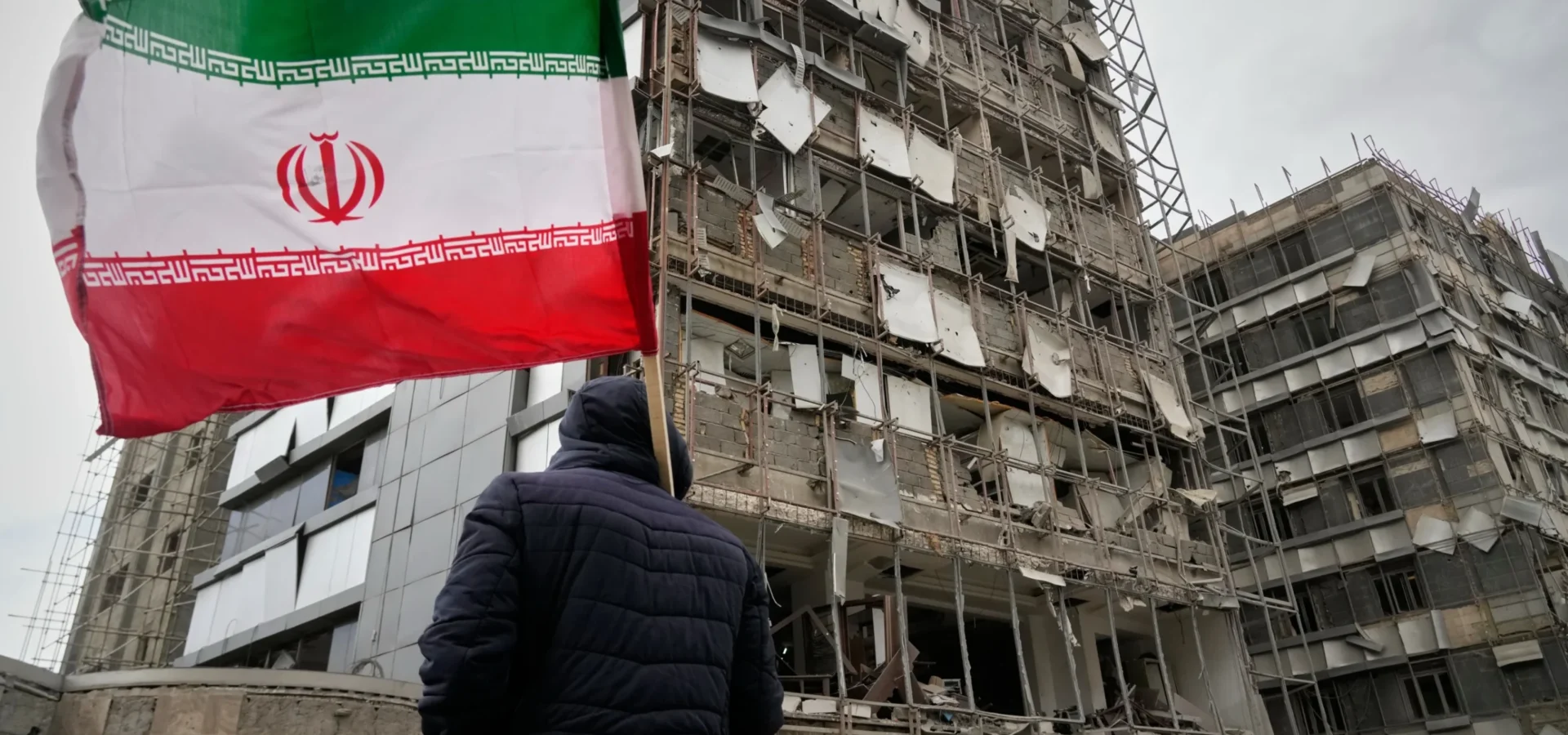
While presenting itself as a victim on the international stage, the United Arab Emirates silently entered the war against Iran on the side of Washington and Tel Aviv. From sharing data from AI-powered radar systems, to bombing Iranian civilian targets, Abu Dhabi has been by far the most hostile Gulf nation to Tehran.
As the second largest recipient of Iranian missile and drone strikes on its territory, behind only Israel, the UAE has attempted to present itself as following a path of “cautious de-escalation”; in alignment with the position of its fellow Gulf Cooperation Council (GCC) allies. Headlines to this effect have even been run in corporate media, such as “UAE refuses to be drawn into the war, even as Iranian missiles rain down”.
Yet, Iran’s Islamic Revolutionary Guard Corps (IRGC) did not coincidentally target the Emirates with such heavy blows, including to its infrastructure. The UAE, as the most consequential nation to join and push for the “Abraham Accords” series of normalisation agreements with Tel Aviv, began receiving Israeli radar systems as early as 2022. This move even drew former IRGC Navy leader, Ali Reza Tangsiri, to warn that the move “will destabilize, disturb and create insecurity for both himself and this region.”
According to a senior Iranian official, who spoke to the Middle East Eye, only weeks into the war Iranian intelligence concluded that “the UAE also made some of its own air facilities available for operations against Iran.” This included using its facilities to permit an alleged Israeli false-flag attack against Oman, the one Gulf nation that Iran had refrained from striking.
On March 7, some Iranian media outlets blamed the UAE for complicity in an attack on an Iranian water desalination facility located on Qeshm Island. Although Iran’s Foreign Minister Abbas Aragchi suggested the US carried out the strike from Bahraini territory, speculation continued about possible Emirati involvement, which Abu Dhabi denied.
By early April, another major development occurred when Iranian air defences shot down a Chinese-made Wing Loong II UAV over the skies of Shiraz, reportedly carrying out reconnaissance in the vicinity of a missile city site. These drones are only in the possession of two countries in the region, the UAE and Saudi Arabia. Tehran immediately said they identified it as belonging to the Emirates.
For decades, the United Arab Emirates has attempted to lay claim to three Iranian islands – Abu Musa, along with Lesser and Greater Tunb – which Iran warned the UAE was seeking to aid the US in attempting to capture. More than simply a claim, and amidst reports of the UAE allowing significant strikes and an American military buildup in the area, Iran’s armed forces issued an official evacuation order for the Emirate of Ras al-Khaimah.
Over time, Abu Dhabi’s rhetoric began to grow ever more hostile towards the Islamic Republic, with senior officials using the words “terrorist” and “terrorism” to describe Iran’s actions. The UAE’s US Ambassador, Yousef al-Otaiba, also penned an article for the Wall Street Journal opposing any ceasefire with Iran, seemingly calling for regime change, adding that:
“We need a conclusive outcome that addresses Iran’s full range of threats: nuclear capabilities, missiles, drones, terror proxies and blockades of international sea lanes”
This rhetoric appears in line with reports that following the two-week temporary US-Iranian ceasefire was declared, the UAE has privately lobbied Washington to continue the war of aggression. Publicly, Emirati officials have also advocated for the US position regarding the future status of the Strait of Hormuz.
Within 24 hours of the temporary ceasefire, an Iranian oil refinery was bombed by what Iranian media said was a Dassault Mirage 2000-9 fighter jet. This direct attack, which Tehran accused the Emiratis of being behind, then triggered a direct retaliation and temporarily threatened the stability of the ceasefire.
For Abu Dhabi’s part, it denies any wrongdoing or participation in the war. It has also been exposed for lying about the rate of interceptions it has pulled off against Iranian missiles and drones, downplaying the damage inflicted upon it, while refusing to recognise successful loitering munition attacks despite them being filmed. It had additionally arrested over 100 people for filming Iranian strikes on the country.
On top of this, Abu Dhabi operates the GlobalEye airborne early warning & control (AEW&C) platform, collects advanced signals intelligence data through its Project Dolphin program and uses advanced AI-powered radar systems, specifically to help track Iranian missile launches to protect Israel and warn it in advance of incoming projectiles.
In 2025, the Emirati regime was outed as the secret customer behind a $2.3 billion contract with Israel’s largest weapons firm Elbit Systems. Its cooperation with Israel goes beyond simply contracts and cooperation on tracking Iranian fire at Israeli targets, it extends to other fronts of the regional war also. Last year, the UAE reportedly secretly deployed Israeli ELM-2084 radars in Somalia, in order to monitor missile and drone launches from Yemen.
Then there are the myriad of multinational corporations, tech, and security firms operating in the Emirates, which may not be directly implicated in the fighting, but whose technology is crucial to Israeli-US war efforts across the region especially in the realm of AI platforms they create. This appears to be another reason that Iran has struck the UAE, Dubai in particular so hard compared to other Gulf nations and cities.
Far from a defenseless victim caught in the crossfire, the United Arab Emirates has played a crucial role on the side of the US and Israeli aggressors. Furthermore, during the two-week ceasefire period, the UAE has pursued a course of public antagonism, demanding Iran pay for the damages inflicted against it, while an Emirati government plane was tracked to have landed in Tel Aviv, coinciding with a visit from US CENTCOM Commander Bradley Cooper.